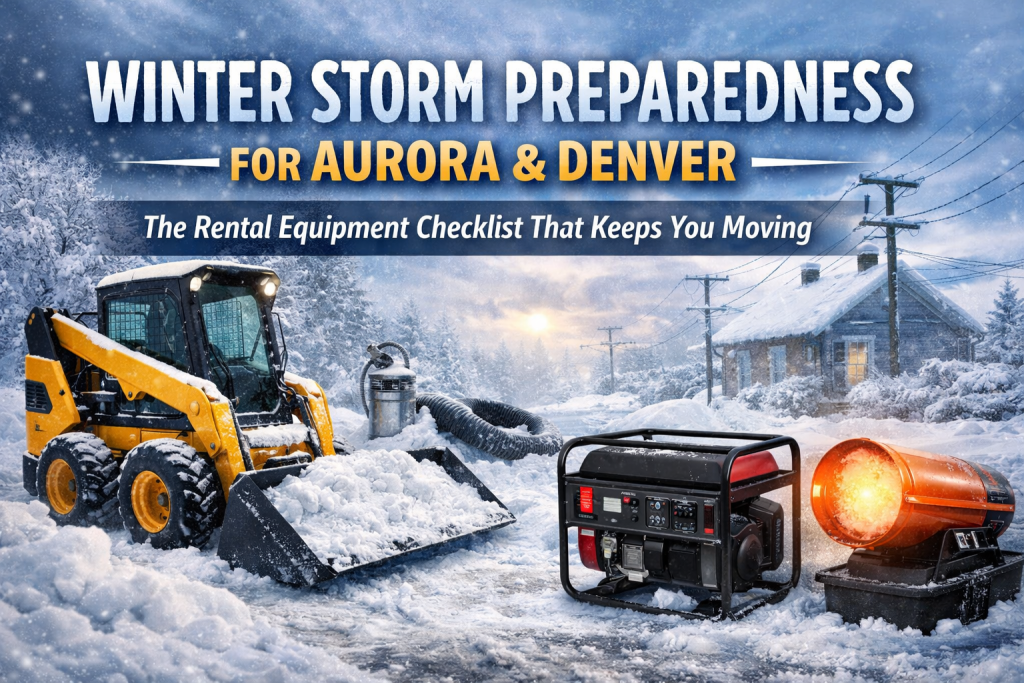
Winter Storm Preparedness for Aurora & Denver: The Rental Equipment Checklist That Keeps You Moving
Colorado winters on the Front Range have a way of changing plans fast. One day it’s dry pavement and sunshine—then an overnight storm drops heavy snow, temperatures dive, and the next morning brings slick walks, frozen lines, and stressed equipment. Even when snowfall totals aren’t extreme, rapid melt-freeze cycles can create ice problems, blocked access, and unexpected water where you don’t want it.
The good news: you don’t need to own every tool that could possibly save the day. Renting gives homeowners, property managers, and contractors a practical way to get the right equipment exactly when winter demands it—without paying year-round storage and maintenance costs.
Below is a winter-focused, field-tested checklist: what to rent, when to rent it, and how to plan so you stay safe, keep access open, and reduce the risk of expensive damage when winter hits hard.
Why Winter Preparedness Matters on the Front Range
Winter issues in Aurora and Denver usually fall into four buckets:
- Access problems: snow drifts, blocked driveways, buried entrances, icy paths
- Freeze problems: frozen pipes, cold garages/shops, temperature-sensitive areas
- Power problems: outages that shut down heat, tools, and operations
- Water problems: snowmelt flooding, seepage, backups, standing water
Planning around these scenarios helps you choose the right tool for the job—without over-renting or scrambling after the storm has already arrived.
Step 1: Keep Access Open with a Smart Snow-Moving Plan
Snow removal isn’t just about clearing—it’s about where the snow goes and how quickly you need results.
For small to moderate areas: prioritize speed and control
If you’re handling a driveway, walkway, or a small commercial entry:
- Clear early and often during the storm (snow is lighter before it compacts)
- Create a designated stacking area that won’t block sightlines or drains
- Follow up with a plan to prevent refreeze (especially at entries and shaded areas)
For deeper snow and larger sites: rent equipment that moves volume
When you’re dealing with deep snow, plowed berms, or a jobsite/lot that must open on schedule, handheld methods can become slow and risky. Compact equipment helps you clear faster and move heavy, wet snow more efficiently.
Why skid steers are winter MVPs
- Move volume quickly
- Fit in tighter spaces than larger machines
- Relocate snow piles to reduce blocked visibility and drainage issues
If you’re unsure which machine size or attachment is best for your site, your rental partner can recommend the right match based on square footage, snow depth, and access constraints.
Don’t forget the “where does it go?” problem: hauling and relocation
Sometimes pushing snow into piles isn’t enough—especially when piles block parking, loading zones, or visibility. In those cases, relocation or hauling becomes part of the plan.
A dump trailer can be a practical solution for:
- Moving snow away from entrances or traffic lanes
- Relocating piles before the next storm arrives
- Cleaning up after repeated snow events when stacking space is limited
Pro tip: Plan your snow storage areas early in the season so you don’t run out of room by mid-winter.
Step 2: Reduce Slip Hazards with a Better Ice Strategy
Ice is often more dangerous than snow—especially with the Front Range melt-freeze cycle. You can have a clean-looking surface at 4 p.m. and a skating rink by 7 a.m.
A strong winter ice strategy includes:
- Pre-treatment where feasible before a storm
- Mechanical removal instead of trying to “salt over” thick ice
- Post-storm spot treatment at high-traffic and high-risk areas
Where ice is most likely to form
- North-facing or shaded walkways
- Drainage low points
- Entry thresholds and ramps
- Areas near downspouts and meltwater runoff
For larger properties, spreading tools can help apply ice melt evenly and efficiently, saving time and reducing missed spots.
Safeguard Pipes and Prevent Damage with Targeted Heating Rentals
Frozen pipes can be one of the most expensive winter surprises—often because damage happens when the pipe thaws, not when it freezes.
High-risk areas to watch
- Garages and workshops with exposed lines
- Utility rooms near exterior doors or vents
- Basements and crawl spaces on perimeter walls
- Older buildings with inconsistent insulation
When renting heaters makes sense
Renting is ideal when:
- You need heat temporarily during a cold snap
- You have a freeze-risk area that only needs support a few days
- You need targeted warmth in a space that isn’t connected to your main heating system
Common heater use cases
- Thawing cold-prone utility areas
- Stabilizing temperatures in garages or shops
- Providing localized heat where building systems fall short
Safety reminder: Always follow safe operating practices for the specific heater type, including ventilation needs and clearance requirements. Use the right heater for the right environment.
Step 4: Prepare for Power Outages (And Keep Heat Running)
Winter outages don’t just cut lights—they can knock out furnaces, sump systems, refrigeration, and jobsite operations. If heat goes out long enough, frozen pipes become a real risk.
That’s why backup power is one of the smartest winter readiness moves.
How to choose the right generator rental
Start with two questions:
- What do you need to run? (furnace blower, fridge, lights, sump, essential tools)
- How long do you need to run it? (short outage vs. multi-day event)
If you’re unsure about sizing, create a quick list of essential items and their wattage. A rental team can help you select a generator that matches your needs without overspending on oversized capacity.
Generator safety basics (especially in winter)
- Operate portable generators outdoors only
- Keep them well away from doors, windows, and vents
- Use properly rated cords and connections
- Never backfeed power into a home electrical system without proper equipment and qualified installation
Backup power is a game-changer—when used correctly.
Step 5: Manage Snowmelt and Water Intrusion with Pump Solutions
Front Range winters often bring a second act: rapid warming after a storm that creates meltwater problems. Water that pools near entrances or foundations can refreeze into dangerous ice, seep into basements, or cause disruption at a jobsite.
Renting a pump can be the right solution when you need to move water quickly and efficiently.
When to consider a pump rental
- Standing water near doors, garages, or stairwells
- Basement seepage during warmups
- Water collecting in low points that refreeze overnight
- Jobsite water that halts work or creates hazards
Planning tip: Pumping is easiest when you also plan discharge—where the water is going, how far, and what hose setup is required to handle the flow.
Step 6: Handle Winter Plumbing Issues with the Right Specialty Tools
Winter plumbing problems aren’t limited to freezing. Backups, blockages, and slow drains can become more common when temperatures swing, usage patterns change, or older systems struggle.
Renting specialty pipe and plumbing tools is practical because:
- These tools can be expensive to buy for occasional use
- The right tool can save hours of trial-and-error
- You can match the tool to the specific issue instead of improvising
If you’re not sure which tool fits your situation, describe the symptoms and access points to your rental team to get matched to the right option.
Step 7: Use Winter Downtime for Maintenance and Small Engine Repairs
Winter is also a strategic season for maintenance—especially if you rely on seasonal equipment. Getting service done during the off-season can help avoid delays when spring demand ramps up.
Common off-season maintenance needs include:
- Tune-ups and general servicing
- Oil changes and belt replacement
- Blade sharpening and routine upkeep
If your equipment is essential to your property or business operations, winter maintenance is an investment in reliability.
Step 8: Make Winter Rentals Easier with a Simple Logistics Plan
Storms create urgency—so availability and logistics matter as much as the tool itself.
Here’s how to stay ahead:
- Reserve early when a storm is in the forecast
- Pick up before roads become difficult or arrange delivery if available
- Ask for a quick operation walkthrough (startup, shutdown, refueling, safety)
- Inspect at pickup so you know exactly what you’re receiving
A little planning prevents last-minute scrambling—especially when the most in-demand winter equipment is getting rented quickly.
Winter Readiness Checklist
Use this as a quick planning worksheet:
Access & Snow
- Equipment for moving heavy snow (site-size dependent)
- Plan for stacking vs. hauling
- Surface-safe approach for entries and walkways
Ice Control
- Pre-treatment plan
- Post-storm refreeze prevention
- Even application strategy for larger properties
Freeze Protection
- Targeted heating for vulnerable areas
- Plumbing tools if you maintain older systems or exposed lines
Backup Power
- Generator sized for essential loads
- Outdoor-rated cords and safe placement plan
Water Control
- Pump solution for meltwater
- Hose/discharge plan to keep water away from buildings and foot traffic
Maintenance
- Off-season equipment tune-ups and repairs
Winter Is Easier When You Rent Strategically
Winter preparedness isn’t about owning everything. It’s about knowing what winter actually brings to Aurora and Denver—and renting the right tools quickly when forecasts (or surprises) demand it.
Whether you’re working to keep access open, prevent freeze damage, maintain operations during outages, or manage meltwater, having a trusted rental partner makes winter less stressful and more manageable.
If you want help dialing in the right winter rental setup, contact your local equipment rental team and describe your situation (property size, snow depth, freeze risks, power needs, and timeline). A short conversation can save you time, money, and headaches—especially when winter weather hits fast.