
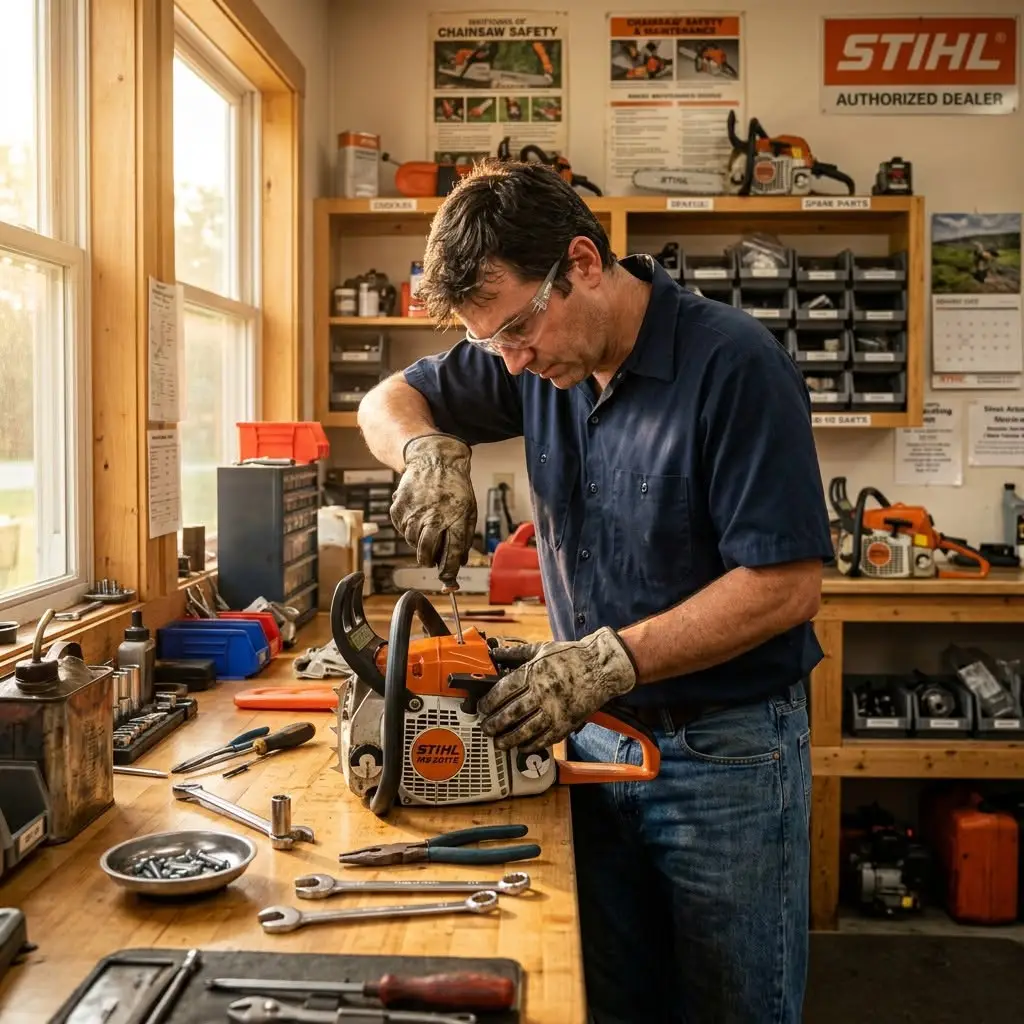
Maximizing the Lifespan of Your STIHL Power Equipment: Why Professional Maintenance Matters
When you invest in STIHL outdoor power equipment, you are buying a legacy of engineering excellence, durability, and unrelenting field performance. For decades, homeowners, dedicated DIY enthusiasts, and commercial landscaping professionals across the Denver metro area have relied on STIHL chainsaws, trimmers, blowers, and edgers to tackle the toughest outdoor jobs. Whether you are clearing overgrown brush in Aurora, grooming a pristine lawn in Centennial, or managing a large-scale commercial property in Parker, these tools are built to handle rigorous workloads.
However, even the most rugged, high-performance machinery requires consistent, specialized care to maintain its peak operating efficiency. Outdoor power equipment operates under incredibly demanding conditions. Engines are regularly exposed to thick clouds of dust, pulverized wood fibers, abrasive dirt, and intense thermal stress. Over time, this operational strain causes natural wear and tear that can slowly degrade engine performance, reduce fuel economy, and ultimately shorten the overall lifespan of your investment.
Proactive equipment care is not merely about addressing mechanical failures after they happen; it is about preventing those failures from occurring in the first place. For property owners and professional landscapers alike, a well-maintained tool translates directly to operational reliability. When a weekend project or a time-sensitive commercial contract depends on your equipment starting on the very first pull, routine maintenance becomes your greatest asset. Neglecting basic care leads to hard starting, sudden stalling, diminished cutting power, and expensive emergency repairs that could have easily been avoided.
Partnering with a dedicated local authorized service center ensures that your equipment receives the detailed, factory-specified attention it requires to thrive season after season. At All Seasons Rent-All, we understand the intricate mechanics of your outdoor tools. By committing to a structured preventative maintenance schedule, you protect your financial investment, maximize job site productivity, and ensure that your tools remain safe, efficient, and ready to perform whenever duty calls.
The Complex Anatomy of High-Performance STIHL Engines
To truly appreciate the value of professional maintenance, it is essential to understand what makes your power equipment run. STIHL tools are engineered with advanced internal combustion technologies designed to maximize power-to-weight ratios while minimizing exhaust emissions. Many modern units utilize specialized engine platforms that combine the crisp acceleration of a traditional two-stroke engine with the high torque and clean-burning efficiency of a four-stroke system.
These sophisticated configurations rely on a precise balance of fuel, air, and spark to run optimally. Because these engines operate at exceptionally high revolutions per minute (RPM)—often exceeding 10,000 RPM under load—even minor disruptions in their internal systems can cause significant operational performance issues.
The Delicate Balance of the Fuel System
The modern small engine fuel system is a marvel of compact engineering, but it is also highly sensitive to environmental contaminants and fuel quality. The carburetor manages the exact ratio of air and fuel entering the combustion chamber. Within the carburetor are microscopic internal passages, delicate metering diaphragms, and tiny needle valves that control fuel flow.
When fuel sits in these tight passages, it can rapidly degrade, leaving behind a gummy varnish or hard deposit that restricts fuel flow. This restriction throws off the air-fuel mixture, forcing the engine to run lean (too much air) or rich (too much fuel). A lean mixture causes excessive heat generation, which can permanently score the cylinder wall and piston, while a rich mixture leads to excessive carbon buildup, fouled spark plugs, and heavy exhaust smoke.
Crucial Air Filtration and Combustion Mechanics
An engine is essentially a heavy-duty air pump. To generate power efficiently, it must draw in a continuous, unrestricted stream of clean air. STIHL equipment features advanced, multi-layered air filtration systems designed to trap microscopic dust particles before they can enter the intake tract.
If an air filter becomes clogged with dust, sawdust, or pollen, the engine is forced to work much harder to draw in air, leading to a massive drop in power, increased fuel consumption, and severe thermal stress. Furthermore, if fine abrasive particles manage to pass through a damaged or poorly fitted filter, they act like sandpaper inside the cylinder, rapidly wearing down the piston rings and destroying the engine’s compression. Without proper compression, your tool will lose its cutting or blowing power and eventually refuse to start altogether.
Common Small Engine Issues and the Pitfalls of DIY Fixes
When a reliable tool begins to malfunction, the temptation to attempt a quick DIY repair can be strong. With online video tutorials easily accessible, many equipment owners believe that troubleshooting a small engine is a simple weekend task. However, modern outdoor power equipment is highly sophisticated, and unguided DIY repair attempts frequently result in misdiagnosis, further mechanical damage, and increased repair costs.
The Real Danger of Ethanol and Stale Fuel
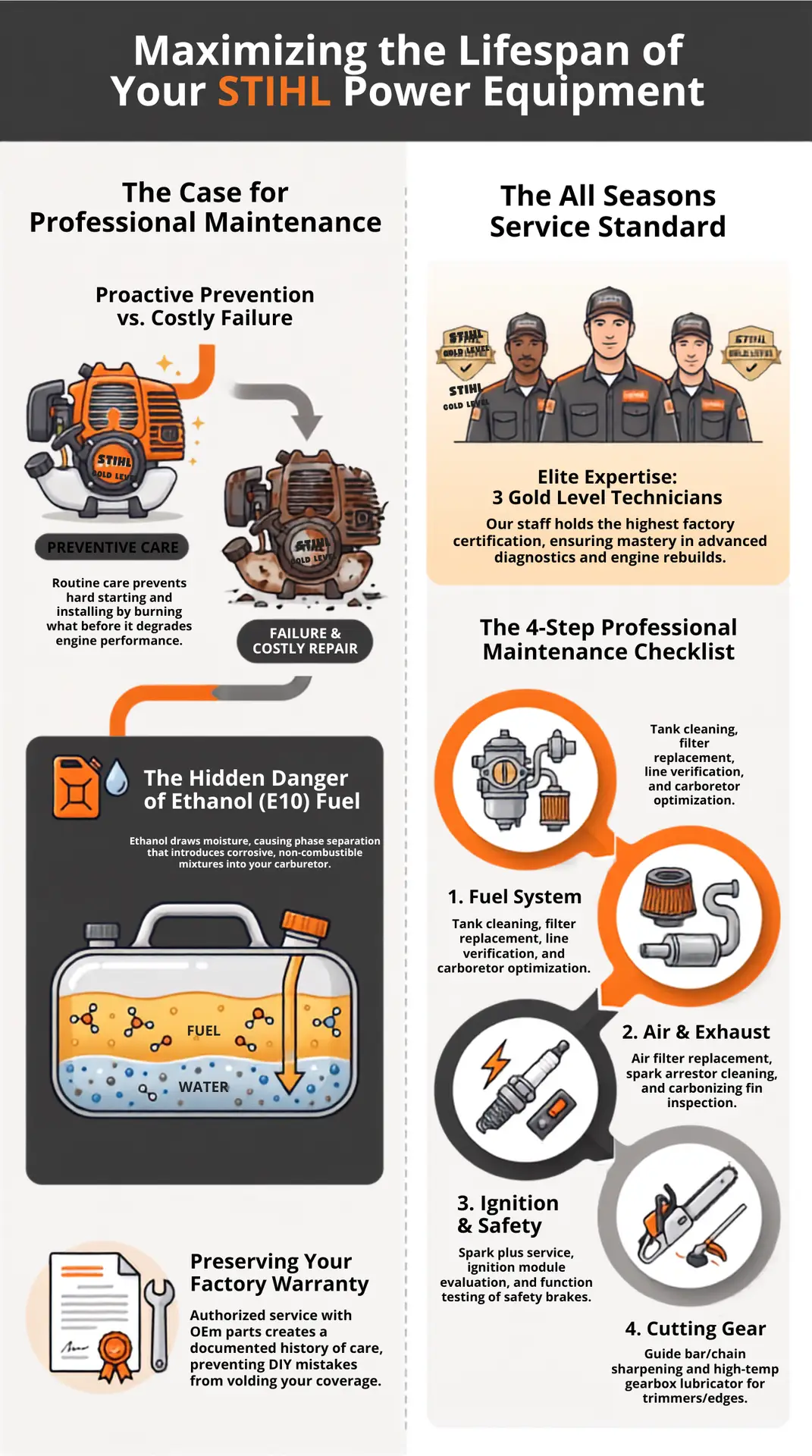
The single most common cause of small engine failure in the Denver metro area is the use of improper or stale fuel. Modern pump gasoline frequently contains up to 10% ethanol ($E10$). While ethanol burns acceptably well in large automotive engines, it is highly detrimental to small, high-RPM outdoor power equipment. Ethanol is naturally hygroscopic, meaning it actively draws moisture directly out of the surrounding air.
When water mixes with ethanol in a fuel tank, a process called phase separation occurs. The heavy water-and-ethanol mixture drops straight to the bottom of the tank, where the fuel pickup line is located. If you attempt to start your tool after phase separation has occurred, the engine draws this highly corrosive, non-combustible mixture directly into the carburetor.
Furthermore, ethanol aggressively degrades the flexible rubber fuel lines, primer bulbs, and internal carburetor diaphragms found in older or heavily used tools. Attempting to clean or rebuild a corrupted carburetor at home without specialized ultrasonic cleaning equipment often results in stripped threads, damaged gaskets, and prolonged frustration.
Misdiagnosing Mechanical Symptoms
Another common pitfall of DIY repair is the frequent misdiagnosis of complex mechanical symptoms. For example, when a chainsaw or trimmer experiences a sudden loss of power under a heavy load, many owners assume the carburetor simply needs to be adjusted. They may begin turning the high- and low-speed mixture screws without using a tachometer, inadvertently setting the engine to run dangerously lean.
In reality, that loss of power might be caused by a completely different issue, such as a severely clogged spark arrestor screen inside the muffler, a subtle vacuum leak around the crankshaft seals, or a loss of engine compression due to worn piston rings. Adjusting a carburetor to compensate for an underlying mechanical failure does not fix the root issue; instead, it often accelerates terminal engine failure. Professional diagnostic tools and pressure/vacuum testing kits are required to pinpoint these subtle internal failures accurately.
Why Professional Service Outperforms DIY Maintenance
Entrusting your valuable outdoor power tools to a qualified local service facility provides a level of precision, safety, and operational reliability that cannot be replicated in a home garage. Small engines require highly specialized knowledge, calibrated tools, and factory-approved diagnostic procedures to ensure they are tuned exactly to the manufacturer’s strict engineering specifications.
The All Seasons Rent-All Advantage: 3 Gold Level Factory-Trained Technicians
The absolute highest standard of care for your equipment is found at an authorized service center that invests heavily in elite technical training. At All Seasons Rent-All, we pride ourselves on our unparalleled level of expertise, featuring 3 Gold Level Factory-Trained technicians on our staff.
What is a Gold Level Technician?
A Gold Level certification represents the absolute pinnacle of factory training available from the manufacturer. To achieve this prestigious status, a technician must successfully complete exhaustive instructional courses, pass rigorous hands-on diagnostic examinations, and demonstrate master-level proficiency in advanced fuel systems, electrical diagnostics, and complete engine rebuild mechanical procedures.
When you bring your equipment to us, it is serviced by a highly specialized expert who understands every single internal clearance, torque value, and operational tolerance specified by the factory. Our 3 Gold Level Factory-Trained technicians possess the advanced diagnostic skills needed to quickly uncover hidden mechanical issues, perform flawless component adjustments, and restore your machinery back to its precise factory specifications. This level of master craftsmanship saves you time, prevents recurring equipment breakdowns, and guarantees that your machinery performs safely at its absolute maximum capacity.
Precision Tuning and Specialized Diagnostic Equipment
Properly tuning a modern small engine requires specialized diagnostic equipment that is rarely found in a home workshop. For example, adjusting an engine’s operating speed strictly by ear is highly inaccurate and dangerous. Our master technicians utilize advanced digital tachometers to monitor engine RPM in real-time, allowing them to adjust the carburetor so the engine runs safely within its designated power band.
Additionally, many modern high-performance units feature digital engine management modules that continuously adjust the ignition timing and fuel delivery during operation. Diagnosing these advanced systems requires specialized electronic diagnostic tools that interface directly with the tool’s internal computer. Our team utilizes these specialized electronic systems to read stored error codes, analyze total operating hours, and verify system performance with absolute mathematical certainty.
Preserving Warranty Integrity and Ensuring Long-Term Durability
When you purchase a high-quality outdoor tool, maintaining its manufacturer’s warranty coverage is essential for protecting your investment. If an equipment failure occurs and it is determined that a DIY repair or an unapproved aftermarket component caused or contributed to the breakdown, your warranty coverage may be voided entirely.
By scheduling all of your preventative service and mechanical repairs through an authorized facility like All Seasons Rent-All, you establish a documented history of certified professional care. We use original equipment manufacturer (OEM) replacement parts, ensuring that every filter, spark plug, fuel line, and internal component matches the exact material composition and dimensions required by the factory. This meticulous attention to detail preserves your warranty protection, retains the resale value of your tools, and extends their operating life for years.
Comprehensive Preventative Maintenance Checklist
To keep your high-performance outdoor tools performing flawlessly throughout the year, a comprehensive and proactive approach to maintenance is required. By implementing a structured service routine, you can prevent major mechanical breakdowns and keep your equipment operating at peak efficiency. Below is the comprehensive maintenance process performed by the expert service team at All Seasons Rent-All.
1. Complete Fuel System Restoration
Fuel Tank Inspection: Clean out any residual water, debris, or phase-separated fuel from the tank.
Fuel Filter Replacement: Install a fresh, high-micron fuel filter to ensure a clean delivery of fuel to the engine intake.
Fuel Line Verification: Check all fuel lines and primer bulbs for signs of dry rotting, cracking, or hardening, replacing any compromised components with factory-certified parts.
Carburetor Optimization: Clean internal carburetor passages and adjust the metering systems for flawless fuel atomization.
2. Air Intake and Exhaust System Maintenance
Air Filter Replacement: Clean the internal air box housing and replace old air filters to ensure a completely unrestricted, clean flow of air.
Spark Arrestor Service: Remove, inspect, and thoroughly clean the internal exhaust spark arrestor screen to prevent heavy carbon blockages from restricting engine power.
Cooling Fin Inspection: Clean the external engine cylinder cooling fins of compacted dirt, sawdust, and grass clippings to maintain proper engine cooling.
3. Ignition and Electrical System Tuning
Spark Plug Service: Inspect the spark plug, clean away any localized carbon deposits, verify the electrode gap, or replace the plug entirely to ensure consistent engine starting.
Ignition Module Evaluation: Verify the ignition coil air gap and test the stop switch circuit to ensure immediate engine shutdown capability.
4. Cutting Attachment and Safety Mechanism Service
Guide Bar and Chain Maintenance: Inspect chainsaw guide bars for straightness, clean the internal oil drive grooves, file down any rough side burrs, and sharpen cutting chains to a precise, factory angle.
Gearbox Lubrication: Check and replenish specialized high-temperature grease within trimmer, edger, and hedge trimmer gearboxes to minimize frictional wear.
Safety Component Testing: Perform rigorous function checks on critical safety features, including manual chain brakes, throttle triggers, and interlock switches.
Bring Your STIHL Equipment to All Seasons Rent-All Today!
Do not wait for your outdoor power equipment to fail in the middle of a major project or a busy landscaping workday. Proper preventative maintenance is the ultimate key to unlocking the full potential, reliability, and longevity of your tools. Whether your chainsaw needs a precision tune-up for the upcoming season, your string trimmer requires a thorough carburetor cleaning, or you want to ensure your leaf blower is ready for fall cleanup, the elite service team at All Seasons Rent-All is here to provide exceptional assistance.
Our fully equipped authorized service center features 3 Gold Level Factory-Trained technicians who possess the expert skills, diagnostic precision, and genuine OEM parts required to service your equipment to the highest professional standards. We take pride in helping homeowners and professional landscapers across Denver, Aurora, Centennial, and Parker keep their outdoor tools running exactly like new.
Experience the true peace of mind that comes from professional, factory-certified equipment care. Bring your equipment directly to our Aurora store located at 2157 S. Havana Street, Aurora, CO 80014, or give our friendly team a call today at 303-755-3566 to speak with an expert and schedule your next service appointment. Let us handle the technical details so you can focus on getting the job done right!