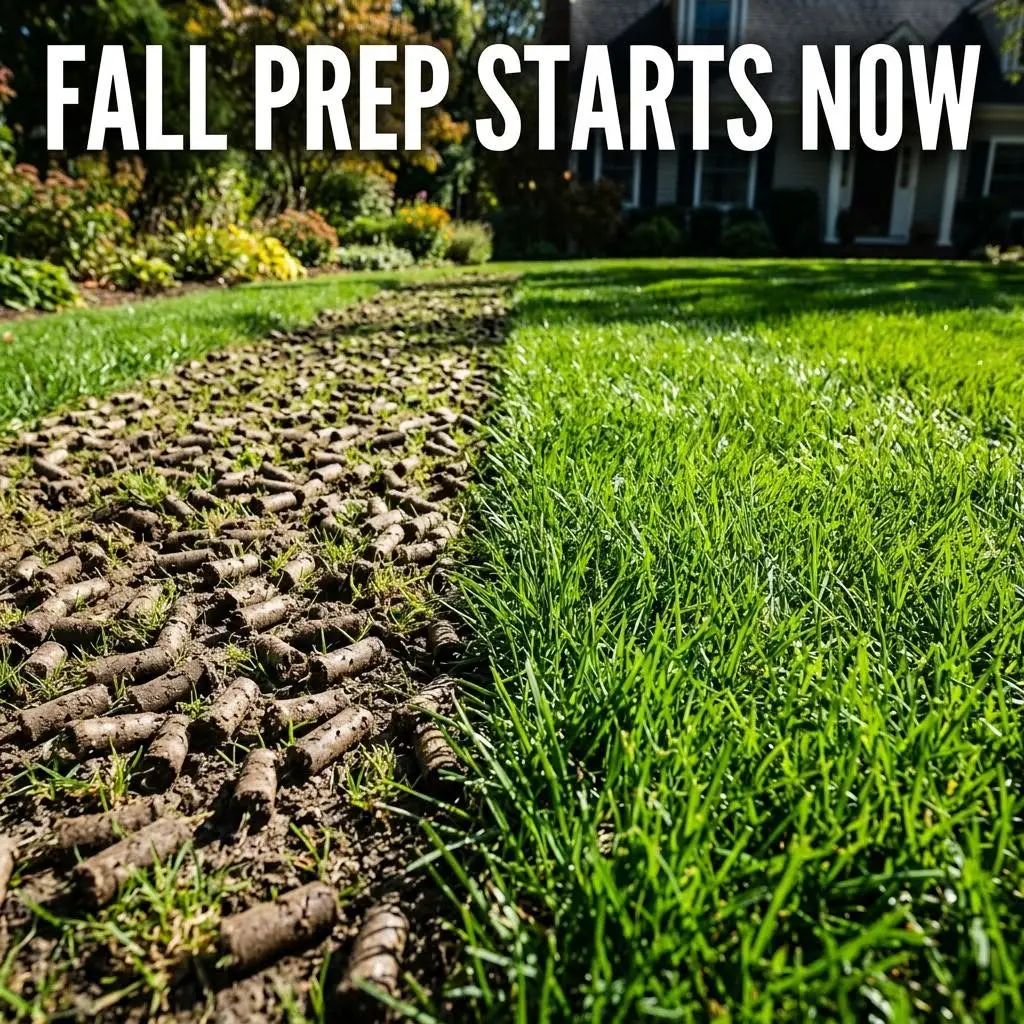
If your lawn sits on compacted clay, fall aeration is one of the best things you can do for it. And if you’re wondering whether you missed your chance this year, you probably haven’t. Early fall is ideal, but mid-October still works if you act now, before the ground freezes. Pair core aeration with overseeding and you’ll give your lawn a real head start for spring. Our TURCO SS-22 overseeder slices shallow grooves and drops seed right into them for good seed-to-soil contact. Rentals start at $46. Colorado State University Extension notes that a lawn can be aerated any time the ground isn’t frozen.
Key Points
Core aeration removes small plugs of soil, creating channels for water, oxygen, and nutrients to reach grass roots.
Front Range clay packs down fast from kids, pets, mowing, and our freeze-thaw winters.
A screwdriver test confirms compaction when the tool stops at 1 to 2 inches after watering.
Overseeding right after aeration places seed directly into the holes, where it stays moist and protected.
Your lawn can still be aerated any time the ground isn’t frozen (per CSU Extension).
Why does clay soil in Denver compact so quickly?
Clay soil in Denver compacts quickly because foot traffic, weather, and summer backyard fun press soil particles together over time. When soil gets packed tight, roots can’t spread out, and water and air can’t get down to them. Denver’s Front Range clay is naturally dense, and the region’s freeze-thaw cycles worsen the problem by expanding and collapsing soil structure repeatedly. The result is a lawn that looks patchy and stressed by spring.
How can a homeowner confirm clay soil compaction?
A simple screwdriver test confirms compaction without special tools. After watering, a 6 to 8 inch screwdriver should push in with steady hand pressure. If the screwdriver stops at 1 to 2 inches, the soil is compacted and needs attention.
Clay soil lawn aeration addresses this condition directly. Core aeration removes small plugs of soil, creating channels for water, oxygen, and nutrients to reach grass roots. Timing is what makes fall lawn care in Denver work: cool-season grass keeps growing while the air is cool and the soil is still warm.
What equipment works best for Denver clay soil?
A core aerator rental provides the mechanical force needed for dense Front Range clay. The self-propelled core aerator from All Seasons Rent All uses 30 hollow coring tines across a 19-inch swath and pulls cores up to 2.75 inches deep. We’re a full-service rental shop in Aurora, so you can pick up the aerator and everything else for the job in one stop.
For most lawn aeration in Denver, renting just makes sense. An aerator rental lets you knock the job out in a weekend without buying a machine you’ll use once a year. If you’re seeding too, add an overseeder rental and you’re set.
Fall overseeding in Colorado works best right after aeration, while the holes are open. Together, the two give cool-season grass a good chance to fill in before winter.
What do you need before you start fall lawn aeration?
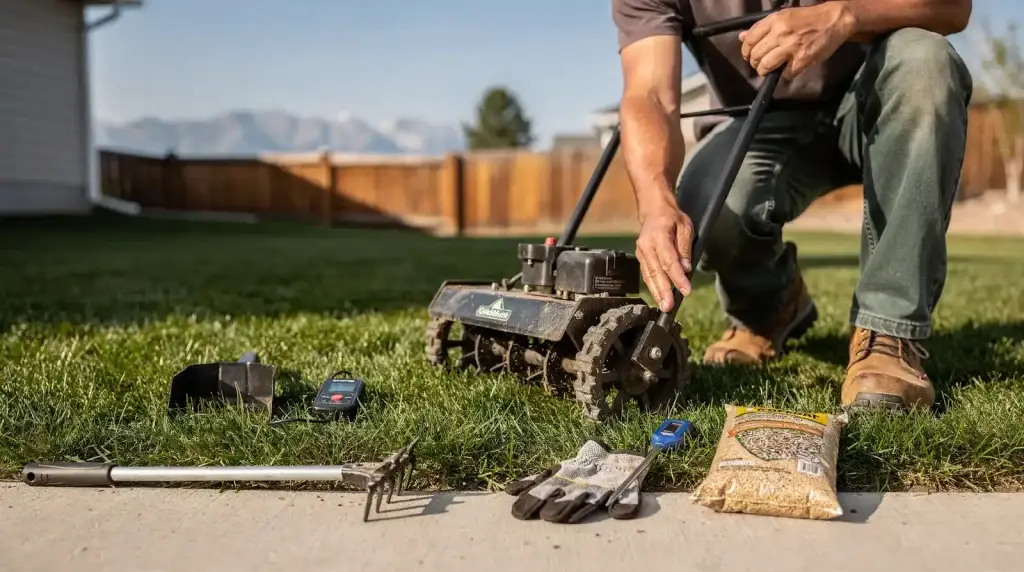
A little prep goes a long way. Before you pull the first core, make sure you’ve got the right machine, the right timing, and a plan.
What equipment does aeration require?
A core aerator rental pulls small plugs of soil from the lawn. Aeration relieves compacted soil and thatch buildup by creating channels that help grass grow denser and healthier. We rent contractor-grade lawn and garden equipment by the 4 hours, day, week, or month. If thatch is thick, add a power rake to clear it before seeding. The rental inventory also includes a 12-inch sod cutter and a sod roller for related lawn projects.
What should homeowners check before renting?
Follow these steps in order:
Confirm the lawn actually needs aeration. A screwdriver test reveals compaction when the tool stops at 1 to 2 inches.
Measure the lawn area to select the right equipment size.
Reserve your aerator rental while there’s still time this fall.
Pick it up at our shop on S. Havana St. in Aurora, or ask about delivery.
Clear the lawn of debris, toys, and hoses before operating the machine.
How do you core aerate a clay lawn step by step?
Core aeration relieves the compaction that chokes Denver’s heavy clay soils. The process pulls small plugs of soil from the yard so water, oxygen, and nutrients reach grass roots directly. Clay soil lawn aeration is easiest in early fall, but you can still do it now as long as the ground isn’t frozen.
A core aerator rental gets you a commercial-grade machine without buying one. It pulls finger-sized plugs across the whole lawn so water and fertilizer can get down to the roots. Skipping this step on clay soil means fertilizer and water sit on the surface rather than reaching the root zone.
What preparation is needed before aerating a Denver lawn?
The lawn needs thorough watering one to two days before aeration. Dry clay resists the tines and produces shallow, ineffective holes. Mark sprinkler heads, valve boxes, and any buried utility lines with flags to prevent machine damage. Mow the grass to roughly 2 inches the day before.
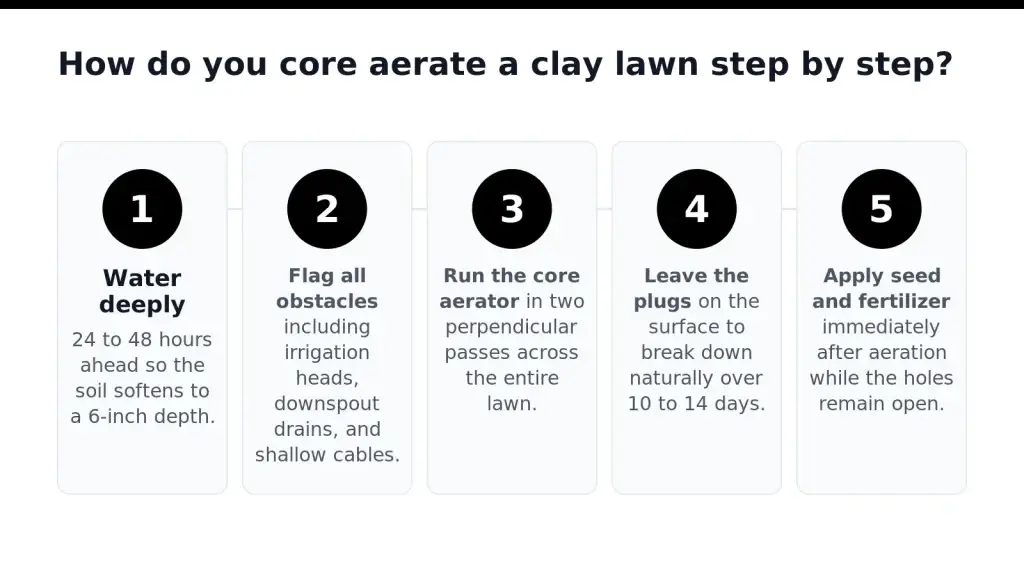
Here’s how to do it:
Water deeply one to two days ahead so the soil is moist several inches down.
Flag all obstacles, including irrigation heads, downspout drains, and shallow cables.
Run the core aerator in two perpendicular passes across the entire lawn.
Leave the plugs on the surface to break down naturally.
Apply seed and fertilizer immediately after aeration while the holes remain open.
Should overseeding follow aeration on Colorado clay lawns?
Fall overseeding Colorado lawns with a cool-season blend takes advantage of warm soil and cooler air temperatures. Our TURCO SS-22 overseeder spreads seed evenly across the lawn. Seeding into each aeration hole gives seed better soil contact than spreading it on an unopened lawn.
If the lawn is mostly bare or rock-hard, you may be looking at a full redo. A 5 HP walk-behind tiller turns the ground over so you can start fresh. Most Denver-area lawns, however, respond well to the core-and-overseed sequence, with the payoff showing up next spring.
How do you overseed after aerating in the fall?
Overseeding after aeration fills thin spots with fresh grass while conditions still favor rooting. Early fall is the strongest window for cool-season lawns in the Denver area, and there’s still time this season if you get started soon.
The process starts with the right equipment. We rent the TURCO SS-22 overseeder plus everything else you need for the job. Aeration relieves the compaction that has choked roots through summer. Overseeding follows immediately, placing seed into the open channels where soil contact is direct.
What steps should a Denver homeowner follow?
Aerate the lawn first, pulling cores across the entire yard.
Grab an overseeder, like our TURCO SS-22.
If thatch is thick, run a power rake first to clear it so seed can reach the soil.
Run the overseeder in two directions to distribute seed evenly.
Apply a light compost topdressing after seeding. A compost spreader makes it quick and even.
Water lightly once or twice a day to keep the seed moist until it sprouts, then water more deeply and less often until the ground freezes.
Should compost topdressing follow overseeding?
A light layer of compost on top is optional, but it can help hold moisture around the seed.
What makes fall the right season for this work?
Fall conditions let new grass root before winter dormancy. Fall overseeding in Colorado works because of the cool air and warm soil. Wait until spring and the new grass has to fight summer heat in its first year.
What mistakes should you avoid this late in fall?
Late-season lawn work fails when homeowners rush the process or skip the diagnosis step. Not every lawn needs aerating every year, but clay soil, heavy traffic, and thick thatch are good signs yours does. The screwdriver test will tell you.
Is it too late to aerate a Denver lawn?
Not yet. Late August through early October is the sweet spot for cool-season lawns, but mid-October still works if you act now, while the grass is still actively growing and before the ground freezes. Waiting much longer leaves new seed too little time to root before winter. If fall lawn care in Denver is on your list, try to get aeration and overseeding done in the next week or two.
What happens if aeration is skipped on compacted clay?
Clay soil lawn aeration matters most in Denver’s Front Range neighborhoods. Compacted clay blocks water, oxygen, and nutrients from reaching roots. The lawn thins out, puddles form after rain, and bare patches spread. All Seasons Rent All provides core aerator rental equipment that pulls actual soil plugs, not just spikes that push soil sideways.
Avoid these late-fall mistakes:
Aerating a lawn that does not need it. Run the screwdriver test first.
Putting it off until the ground freezes. Seed needs time to root before winter.
Using spike shoes instead of a core aerator. Spikes just push soil aside and can pack it tighter.
Skipping overseeding after aeration. Open channels accept seed best right away.
We’re family owned and open six days a week (Mon to Fri 7 to 6, Sat 8 to 4), so stop by and we’ll get you set up with the right aerator rental before the season closes.
FAQs
When should Denver homeowners core aerate clay soil?
Early fall is best, but CSU Extension says you can aerate any time the ground isn’t frozen.
What equipment does All Seasons Rent All offer for aeration and overseeding?
All Seasons Rent All rents self-propelled core aerators, the TURCO SS-22 overseeder (overseeder rentals starting at $46), power rakes, and compost spreaders.
How does a screwdriver test confirm clay soil compaction?
After watering, a screwdriver stops at 1 to 2 inches if the soil is compacted.
Get Your Lawn Ready for Spring
Summer fun packed down your clay soil, but it’s not too late to fix it this fall. Aerate, overseed, keep the seed watered, and your lawn will thank you come spring. All Seasons Rent All is a family-owned equipment rental shop serving the Denver area with aerators, overseeders, power rakes, compost spreaders, and the rest of your lawn and yard equipment. Give us a call at 303-755-3566 or stop by the shop, and we’ll help you pick the right machine.