How to Choose the Right High Reach Equipment Rental for Your Next Project. There’s a moment on every project where you look up, look at your ladder, and realize the two of you are not going to be friends today. Maybe it’s a cottonwood limb hanging over the garage. Maybe it’s a second-story fascia board that needs paint. Maybe it’s a warehouse light fixture that’s been out since the Broncos last looked promising.
That’s the moment high reach equipment earns its keep. The right lift turns a white-knuckle, all-weekend ordeal into a controlled, efficient job you finish before lunch. The wrong one — or worse, no lift at all — turns it into an emergency room story.
At All Seasons Rent-All in Aurora, we’ve been helping Denver-area contractors, property managers, and ambitious homeowners get off the ground since 1971. Here’s how to pick the right machine for the job.
Start with Three Questions, Not a Catalog
Before you fall in love with a specific machine, answer these:
How high do you actually need to go? Not the height of the building — the height of the work. And here’s the part people miss: you need working height, not platform height. A lift with a 19-foot platform height gives a person roughly 25 feet of working reach, because your arms don’t stop where your feet do. Measure honestly, then add a little margin. Nobody has ever finished a job wishing they’d rented something shorter.
What’s underneath you? Finished concrete and warehouse floors are a completely different animal than a soggy spring lawn, gravel, or a sloped Colorado backyard. Indoor electric machines leave floors clean and quiet. Rough terrain machines have the tires and ground clearance to handle dirt without sinking, tipping, or leaving ruts your client will absolutely notice.
Do you need to go up, or up and over? This is the fork in the road that determines everything. If you can park directly beneath the work, a straight vertical lift is cheaper, simpler, and faster. If there’s a hedge, a parked car, a landscape bed, or a roofline between you and the target, you need something with horizontal reach.
Answer those three and the equipment list narrows itself down.
Scissor Lifts: The Workhorse for Straight-Up Work
A scissor lift raises a large platform straight up on a folding X-frame base. What you get is a roomy, stable work deck with railings on all sides — enough room for two people, a toolbox, and materials.
This is the right call for interior painting, drywall and ceiling work, electrical and HVAC service, retail and warehouse maintenance, and sign installation. Anywhere you can position the machine directly under the work and stay there, a scissor lift is the most efficient, most comfortable option available.
Electric models run quiet and emission-free, which matters when you’re working inside an occupied building or a business that’s still open. Rough terrain models handle outdoor jobsites and uneven ground.
The limitation is honest and worth stating: a scissor lift goes up and down. That’s it. No reaching around obstacles.
Boom Lifts: When You Need to Get Over Something
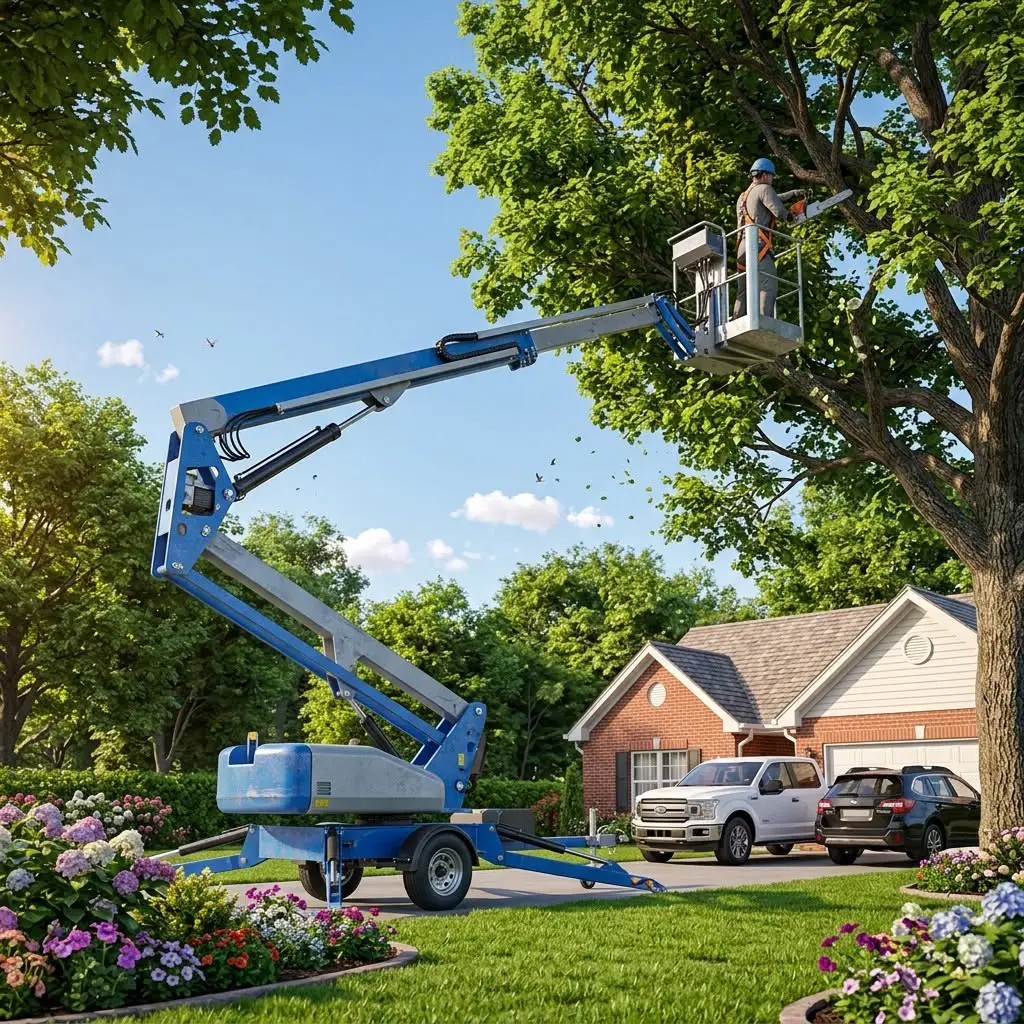
Boom lifts put a work platform on an articulating or telescoping arm, which means you can go up, out, and around. Articulating booms — the ones with the elbow joint — are the tree trimmer’s best friend, because they can snake up and over a canopy to reach the branch you actually want.
For tree work specifically, a boom lift changes the entire risk profile. You’re standing in a guarded basket with both hands free instead of balancing on a ladder leaned against the very limb you’re about to cut. Anyone who has done it both ways doesn’t go back.
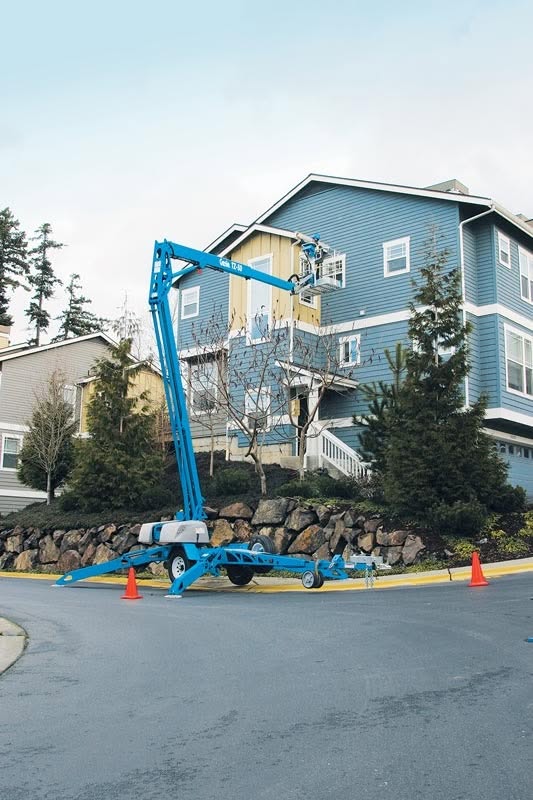
Boom lifts also shine on exterior building maintenance, window and gutter work, high-bay industrial repairs, and any painting job where you can’t get the machine directly against the wall. If your target is on the far side of a landscape bed, a driveway, or a roof pitch, this is your machine.
Material Lifts and Hoists: Save Your Back and Your Timeline
Not every high reach job involves lifting a person. Sometimes it’s a 60-pound HVAC unit, a run of ductwork, a beam, or a truss that needs to go up and stay put while you fasten it.
Material lifts and hoists handle vertical loads with precision and zero drama. They hold position perfectly while you work — something no crew of three guys and a prayer can match. If your project involves repeatedly hauling heavy items to height, a material lift will pay for its rental in labor savings and avoided injuries alone.
Ladders and Scaffolding Still Have a Place
Straight talk: not every job needs a powered lift. For lower-height work with a wide horizontal footprint — like painting a long stretch of siding or doing extended trim work — scaffolding gives you a stable platform and easy lateral movement at a lower cost. Extension ladders remain the right tool for quick, short-duration tasks.
The problem is that people stretch these tools well past their reasonable limits. Falls remain one of the leading causes of serious injury in construction, and the overwhelming majority involve someone on a ladder that was too short, too steep, or on ground that was too soft. If you find yourself standing on the top rung reaching sideways, the tool has already failed. Call us instead.
A Few Safety Habits That Cost Nothing
Inspect before you elevate. Walk the machine, check the controls, test the emergency lowering function, and confirm the guardrails are secure.
Look up. Overhead power lines are the most dangerous thing on most residential jobsites, and they’re invisible until they aren’t. Maintain generous clearance — always.
Respect the ground. Set outriggers where equipped, work on level surfaces, and never reposition an elevated boom across uneven terrain unless the machine is rated for it.
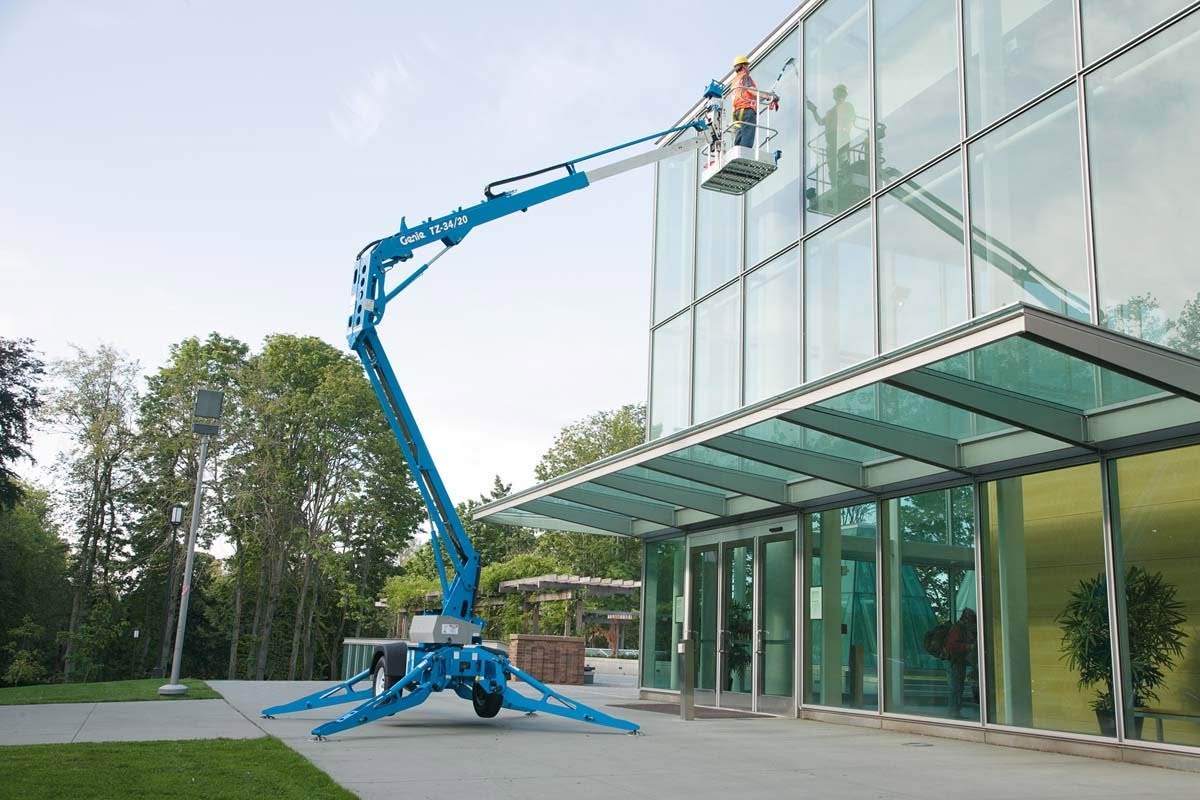
Wear the harness. In a boom lift, a full-body harness with a lanyard attached to the manufacturer’s anchor point isn’t optional — booms can catapult an occupant on impact in a way scissor lifts don’t.
Watch the wind. Colorado gusts are real, and a raised platform is a sail. If the flags are snapping, come down.
Let’s Strategize Your Project
Here’s what we’d genuinely rather do than sell you a machine: talk through your job first. Tell us the height, the surface, the obstacles, and how long you’ll need it, and our team will point you at the right piece of equipment — sometimes a smaller, cheaper one than you came in expecting.
We’re open six days a week with straightforward pricing and no mystery fees, we deliver throughout Aurora, Denver, Centennial, Littleton, Parker, Highlands Ranch, and the surrounding metro, and after 50-plus years we’ve seen just about every version of your project already.
Browse our lifts, hoists, and high reach equipment, or call us at 303-755-3566. Let’s get your project off the ground — literally.